NEW YORK — Construction is officially underway on the Chelsea Beacon redevelopment project, a $167 million initiative that will convert the long-vacant former Bayview Correctional Facility in Manhattan into affordable and supportive housing, along with new community space.
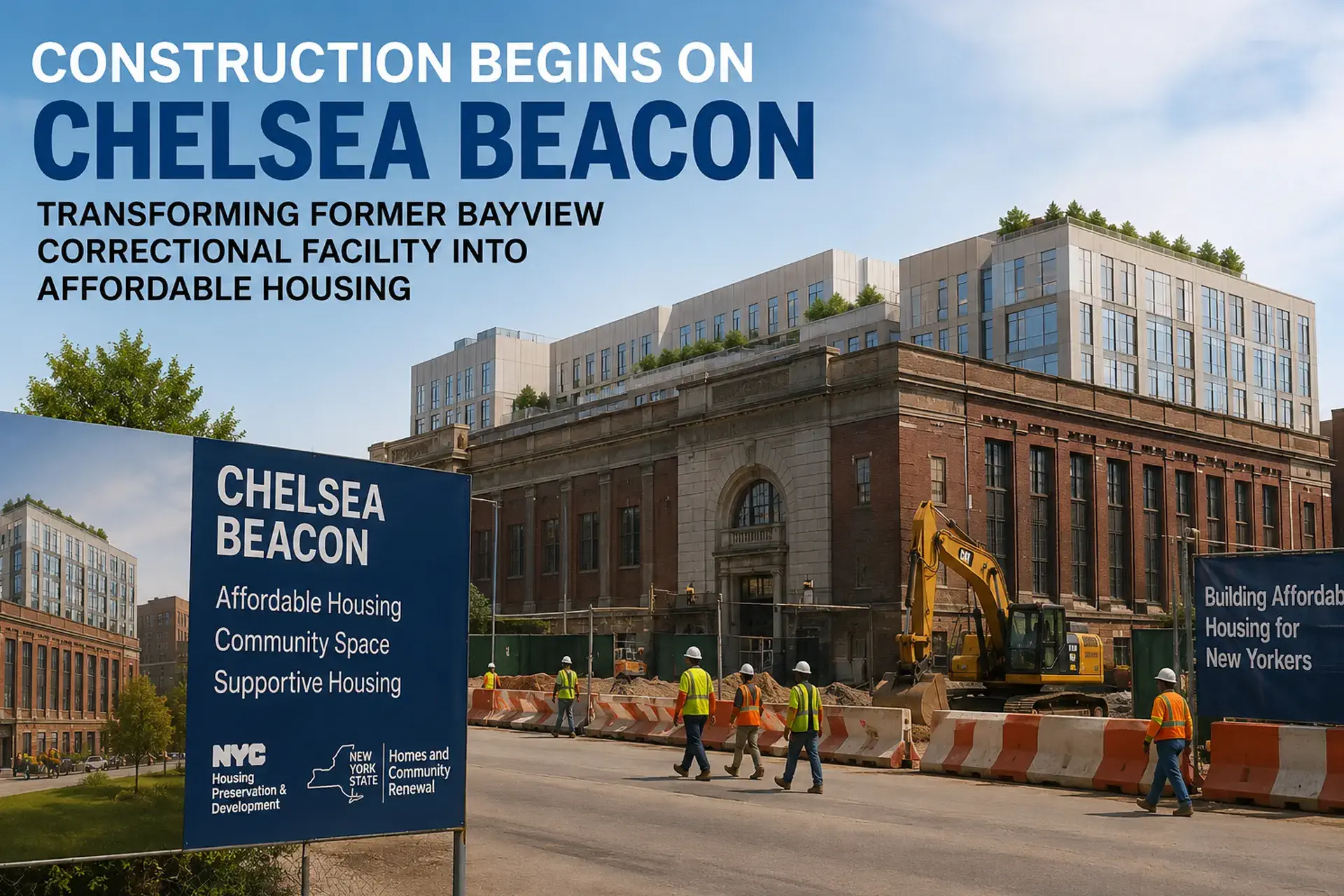
The adaptive reuse project will deliver 131 permanently affordable apartments, including 79 supportive housing units for residents who need access to on-site services. Plans also include a 15-bed Short-Term Transitional Residence Program designed to provide temporary housing and support for individuals living with mental health challenges as they transition toward independent living.
In addition to housing, the redevelopment will feature approximately 8,500 square feet of community space dedicated to educational programs, recreation, youth activities, and neighborhood services.
State officials say the project demonstrates how underused public properties can be transformed into much-needed housing while preserving historic buildings and supporting community development.
Originally constructed in the early 1930s as the Seamen’s House YMCA, the building later became the Bayview Correctional Facility. After the prison closed following Hurricane Sandy in 2012, the property remained vacant for more than a decade.
Rather than demolishing the structure, the redevelopment team is preserving much of the historic building through adaptive reuse. The project includes restoring several architectural elements, including the property’s historic chapel, while adding new residential construction within the building’s interior courtyard.
The supportive housing component will offer residents permanent homes paired with access to social services. The transitional residence program is expected to provide intensive support over approximately 120 days, helping individuals prepare for more independent housing opportunities.
Sustainability is also a major focus of the development. The project will incorporate all-electric building systems and other energy-efficient features designed to improve resiliency and reduce environmental impact.
Construction is also expected to generate local employment opportunities while supporting participation by Minority- and Women-Owned Business Enterprises (MWBEs) and Service-Disabled Veteran-Owned Businesses (SDVOBs) throughout the project.
Once complete, Chelsea Beacon will transform a long-unused state-owned property into a mixed-use development that combines affordable housing, supportive services, historic preservation, and community programming in one of Manhattan’s most established neighborhoods.