
Los Angeles International Airport’s long-delayed automated people mover was expected to be one of the city’s signature transportation upgrades ahead of the FIFA World Cup. Instead, the unfinished transit system has become a case study in the challenges of delivering large-scale infrastructure projects on time and within budget.
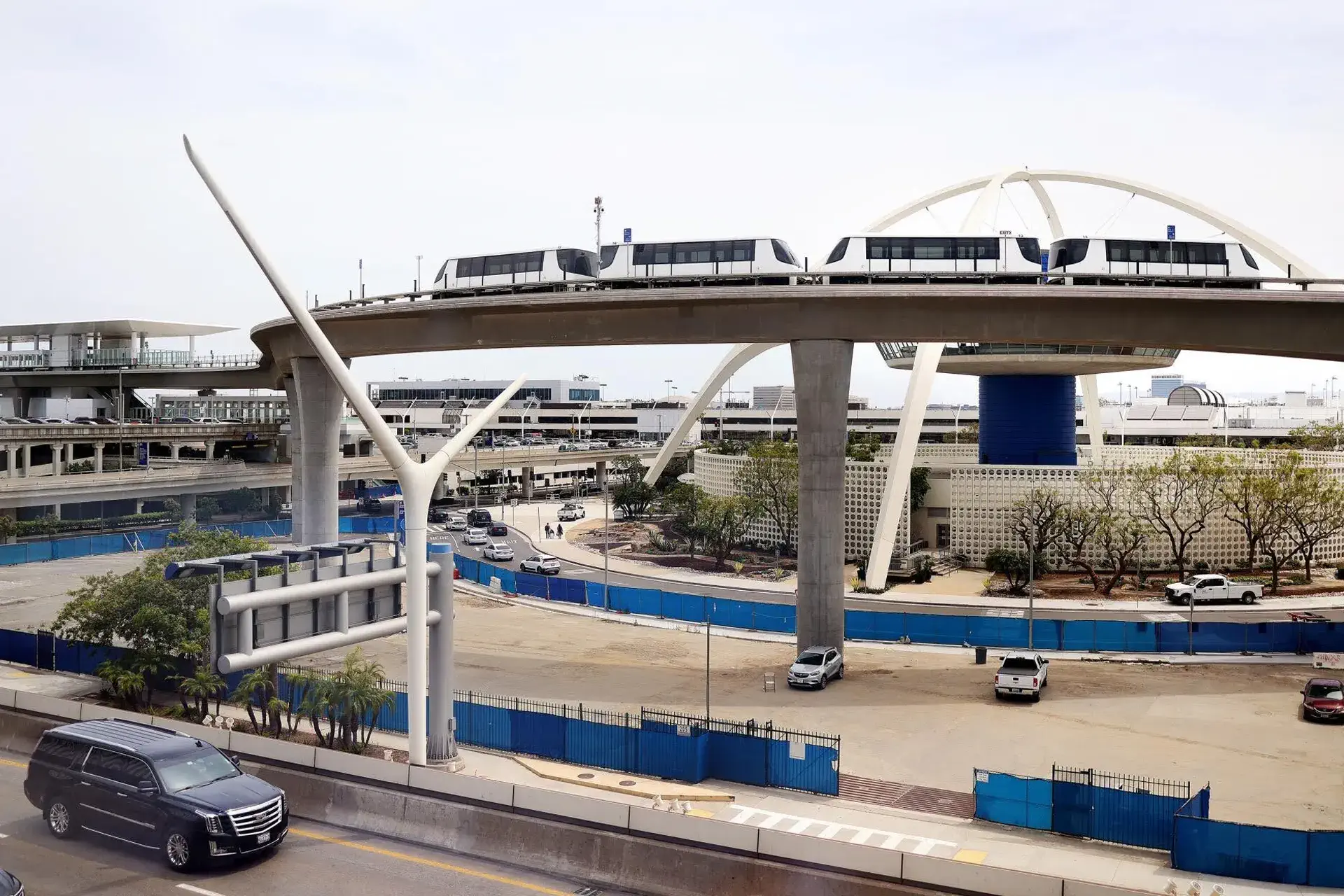
The automated rail system, now branded SkyLink, was designed to reduce traffic congestion around the airport by connecting terminals with parking facilities, transit services and rental car operations. However, despite years of construction and ongoing testing, the system has yet to begin carrying passengers.
Industry observers say the project highlights the governance, contractual and coordination challenges that often complicate megaproject delivery.
Years behind schedule and significantly over budget
Construction on the 2.25-mile elevated people mover began in 2019 under a public-private partnership led by the LINXS consortium. The design-build-finance-operate-maintain team includes Fluor, Balfour Beatty, Dragados USA, Flatiron, Hochtief PPP Solutions, HDR and HNTB, while Alstom is supplying and operating the trains.
The project was originally scheduled for completion in 2023 with a construction budget of approximately $1.03 billion, alongside roughly $918 million in private financing.
Since then, the project has experienced repeated delays that have contributed to an estimated $880 million cost increase.
Testing of the automated system has begun, but airport officials have not announced a date for opening the service to the public.
Contract disputes slowed progress
A 2025 investigation by the Los Angeles County Grand Jury examined the causes of the escalating costs and schedule delays.
The report concluded that the project was not the result of fraud or widespread mismanagement. Instead, it pointed to complex contractual disputes, design changes, coordination issues and governance challenges that slowed construction over several years.
One of the earliest issues involved seismic design requirements. Initial engineering work was completed using bridge design standards before project teams determined that the system also had to comply with California’s building seismic code, requiring redesign work and additional costs.
The project later became bogged down by hundreds of requests for information (RFIs), change-order negotiations and disputes over responsibility for construction delays.
According to the grand jury, these unresolved issues significantly reduced construction productivity while negotiations continued.
Remaining hurdles before opening
Although construction is nearing completion, the consortium reported earlier this year that several items still needed approval before passenger service could begin.
Outstanding issues included final design approvals, landscaping work and utility agreements with the Los Angeles Department of Water and Power, including electrical service accounts and solar power interconnection approvals.
Airport officials have not publicly confirmed when all remaining requirements will be completed.
Lessons for future megaprojects
Infrastructure experts say the LAX people mover demonstrates that technical engineering challenges are often only one part of delivering major public works projects.
Consulting engineer Michael S. Shapiro, an expert in megaproject delivery, noted that projects of this scale also face risks related to governance, contract administration, accountability and dispute resolution.
The grand jury recommended several improvements for future public infrastructure projects, including:
- Stronger contract language to keep work progressing during disputes
- Earlier coordination of building code and regulatory requirements
- Better management of design submissions across city agencies
- Faster dispute resolution procedures
- More thorough contractor evaluation during procurement
The City of Los Angeles said it would implement many of the recommendations on future capital projects, including improving coordination among agencies and strengthening contract provisions to reduce the impact of construction disputes.
Looking ahead to the 2028 Olympics
While the SkyLink system missed the opportunity to serve visitors during this year’s World Cup events, officials continue to view the automated people mover as a critical component of Los Angeles’ transportation network ahead of the 2028 Olympic Games.
Once operational, the system is expected to carry thousands of passengers each week, improving airport access and reducing vehicle congestion around one of the world’s busiest airports.
The project also serves as a reminder that successful megaproject delivery depends not only on engineering expertise, but also on effective contract management, coordination among stakeholders and timely decision-making.