Congressional staff members joined transportation and construction industry representatives on June 29 for a behind-the-scenes tour of Luck Stone’s Bull Run Quarry in Virginia, offering an up-close look at the operations, equipment and materials that support the nation’s transportation infrastructure.
The site visit was organized by the National Stone, Sand & Gravel Association (NSSGA) in partnership with the National Asphalt Pavement Association (NAPA), the American Cement Association and the National Ready Mixed Concrete Association.
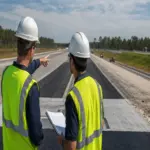
Located at the Bull Run Quarry, the tour also included one of Superior Paving’s asphalt production facilities, giving attendees an opportunity to see how aggregates are processed and used in road construction projects across the region.
Industry showcases modern quarry operations
Throughout the day, participants attended presentations on quarry operations, safety practices, automation technology and the role aggregates play in transportation infrastructure.
Officials from Luck Stone highlighted recent investments in advanced equipment, including autonomous haul trucks that have transported more than one million tons of aggregate material at the site.
The visit also provided an opportunity for congressional staff to ask questions about workforce development, permitting, supply chains and the importance of long-term federal investment in transportation infrastructure.
Mitch Baldwin, NAPA’s director of government affairs, said experiencing construction operations firsthand helps policymakers better understand the challenges and needs of the industry.
He noted that seeing how materials are produced and delivered provides valuable context for policy discussions taking place in Washington.
Live quarry demonstration
After the presentations, attendees toured the active quarry and observed several aspects of day-to-day operations.
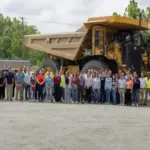
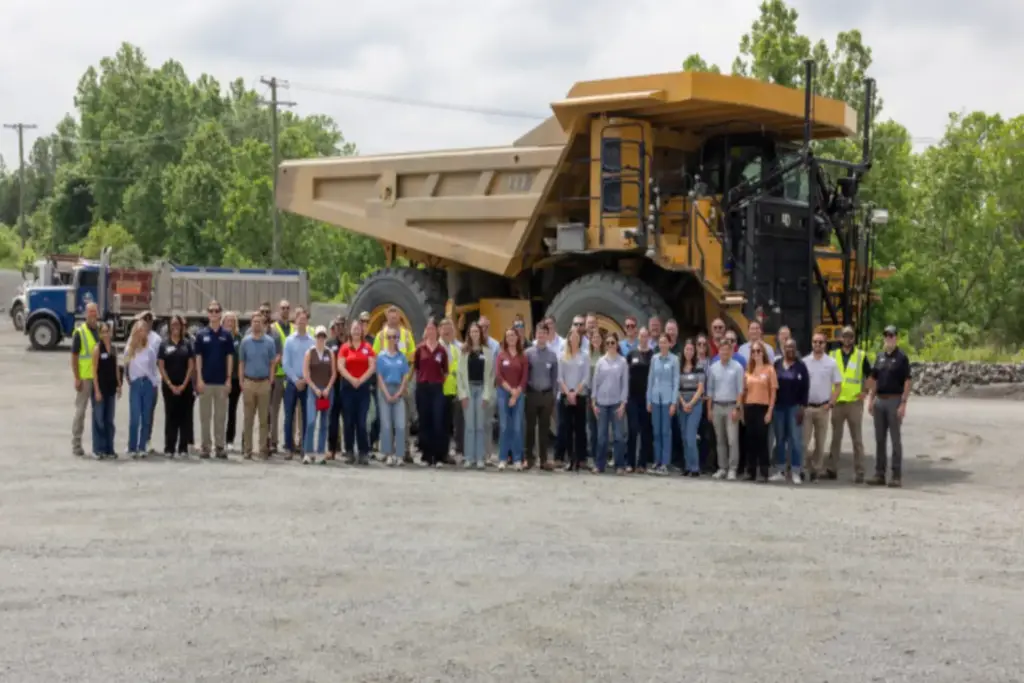
The group gathered near one of the site’s autonomous haul trucks before visiting the quarry itself, where conditions allowed participants to witness a controlled rock blast. Industry officials explained the planning, safety procedures and precision required to carry out blasting operations that supply raw materials for construction projects.
The demonstration offered staff members a closer look at one of the first stages in producing aggregate used for highways, roads and other infrastructure.
Focus on long-term transportation investment
During a working lunch, representatives from several construction and transportation organizations discussed the connection between the morning’s tour and current federal infrastructure policy.
Industry leaders emphasized the need for a long-term surface tran sportation authorization that provides stable funding for highway construction and maintenance projects.
Speakers also highlighted the proposed BUILD America 250 Act, describing the legislation as an important step toward ensuring continued investment in transportation infrastructure while supporting jobs throughout the construction supply chain.
Baldwin said the experience allowed congressional staff to see the scale and complexity of modern quarry operations, giving them a better understanding of why consistent infrastructure funding remains important for communities and businesses across the country.