NEW YORK, N.Y. — New York City officials have unveiled two full-scale sidewalk shed prototypes that could transform one of the city’s most recognizable construction-related features. The redesigned structures aim to create brighter, safer, and more welcoming streets while continuing to protect pedestrians from potential hazards near construction sites and aging buildings.
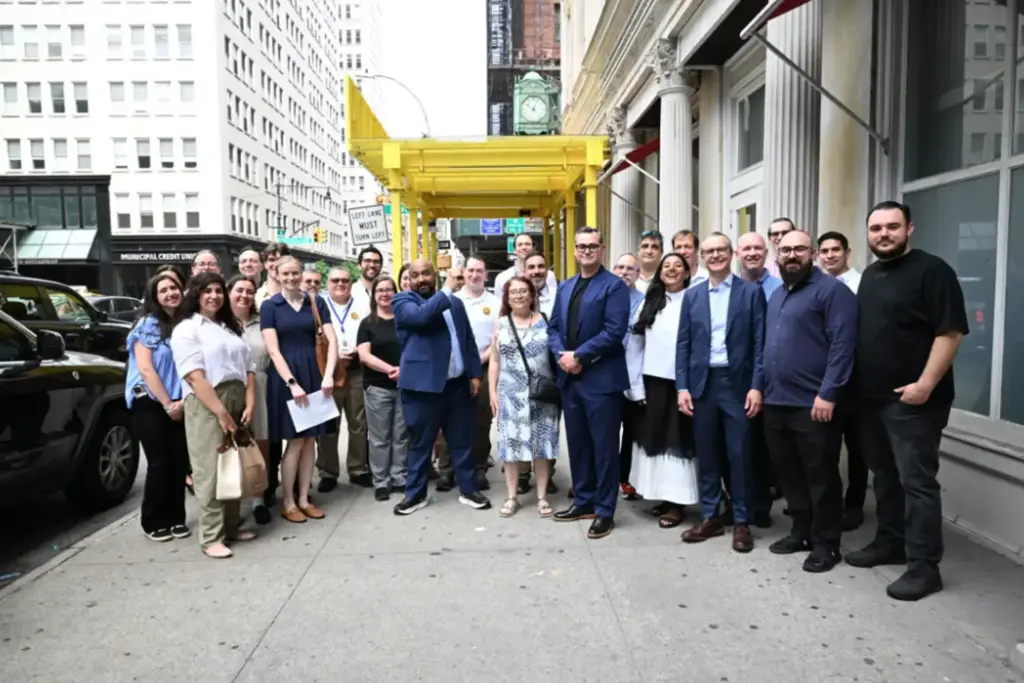
The prototypes were introduced by Deputy Mayor for Housing and Economic Development Leila Bozorg and Department of Buildings Commissioner Ahmed Tigani outside the Department of Buildings headquarters in Lower Manhattan. The structures will remain on public display for several weeks, allowing residents, property owners, and industry professionals to experience the new designs firsthand.
The unveiling marks a significant step in the city’s effort to modernize sidewalk sheds, which have long been criticized for darkening streets, limiting visibility, and creating an uninviting environment for pedestrians.
Reimagining a Common New York Streetscape
For decades, the familiar green pipe-and-plywood sidewalk sheds have been a fixture across New York City’s five boroughs. While they play an important role in protecting pedestrians from falling debris during building repairs and construction work, many residents have expressed frustration with their appearance and impact on public spaces.
City officials say the new designs are intended to address those concerns without compromising safety.
“New Yorkers are tired of sidewalk sheds that darken our streets and take up precious public space,” Mayor Zohran Mamdani said in a statement. “We’re working to reduce the number of sheds across the city and make the ones that remain safer, brighter, and more welcoming.”
Click here to see the prototypes
Introducing the Flex Shed
One of the two prototypes currently on display is the Flex Shed, a design developed for building maintenance projects and emergency repair work.
The structure features an adaptable design that allows contractors to adjust roof heights and support locations based on building conditions and surrounding street obstacles. This flexibility makes it easier to install around bus shelters, utility infrastructure, street signs, and other urban features.
A key feature of the Flex Shed is the option to incorporate transparent decking materials, allowing significantly more natural light to reach the sidewalk below. Officials believe this improvement could make walking beneath sidewalk sheds feel safer and more comfortable for pedestrians.
A More Open Design with the Rigid Shed
The second prototype, known as the Rigid Shed, is designed for larger-scale construction and renovation projects.
Unlike traditional sidewalk sheds, the Rigid Shed eliminates much of the cross-bracing that often obstructs pedestrian movement and sightlines. The result is a cleaner, more open structure that creates wider pathways and improves visibility beneath the shed while maintaining the strength required to protect the public.
City officials say the design provides a more spacious and modern appearance while preserving critical safety standards.
Four Additional Designs Under Consideration
The Flex Shed and Rigid Shed are two of six new sidewalk shed concepts currently being evaluated by the city.
The remaining designs include the Air Shed, Baseline Shed, Wide Baseline Shed, and Speed Shed, all developed through a collaboration between engineering firm Arup and architecture firm Practice for Architecture and Urbanism (PAU).
While renderings of the concepts were released in 2025, this is the first time full-scale versions have been made available for public viewing.
New Rules Could Expand Adoption Across the City
The Department of Buildings is currently developing regulations that would formally approve all six designs for use throughout New York City. Once finalized, the design specifications will become part of the city’s construction guidelines, allowing contractors and property owners to choose from the new models when pedestrian protection is required.
Commissioner Tigani said the initiative reflects a broader effort to improve the quality of public spaces while maintaining essential safety measures.
“Sidewalk sheds serve an important public safety purpose, but that doesn’t mean we have to accept outdated structures that negatively impact our neighborhoods and public spaces,” Tigani said.
Looking Ahead
Officials expect the rulemaking process to be completed later this year. Once approved, the new designs could gradually begin replacing traditional sidewalk sheds throughout the city.
The effort is part of a larger strategy to improve New York’s streetscape, enhance the pedestrian experience, and ensure that necessary construction safety measures better integrate into the urban environment.
If adopted on a wide scale, the redesigned sidewalk sheds could represent one of the most visible changes to New York City’s streets in decades, creating safer and more inviting public spaces while maintaining the protections that residents and workers depend on every day.