A major structural failure at a Manhattan office-to-residential conversion project is expected to trigger years of legal claims, insurance disputes and engineering investigations, according to construction law experts.
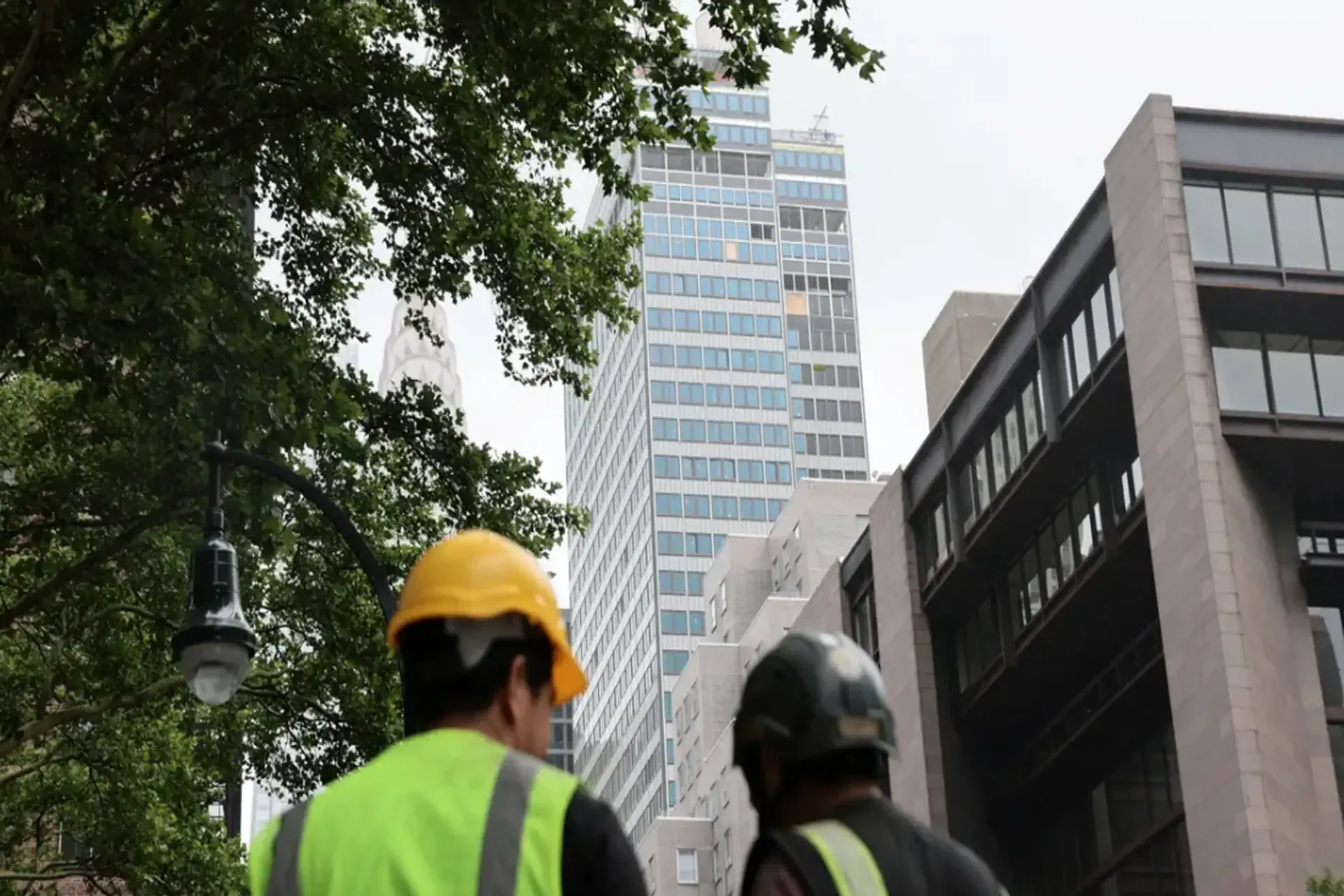
The incident occurred at 235 East 42nd Street, where steel columns failed during the redevelopment of the former Pfizer headquarters. City officials quickly evacuated the building and nearby properties, closed surrounding streets and launched emergency stabilization efforts to prevent further collapse.
No injuries or fatalities were reported, a result legal experts attribute to New York City’s rapid emergency response and established life safety procedures.
Emergency stabilization remains the priority
According to the New York City Department of Buildings (DOB), contractors have made significant progress stabilizing the structure after installing temporary shoring systems. The added support has allowed crews to safely continue inspections and evaluate the building’s condition.
The DOB has also directed project owner MetroLoft to hire an independent structural engineer to conduct a comprehensive forensic investigation into the cause of the failure.
The findings will determine whether the affected section can be repaired or if additional demolition and reconstruction will be required.
Legal claims expected from multiple parties
Construction attorneys say that while public safety comes first, project stakeholders are likely already preparing for a wave of litigation.
Developers, contractors, subcontractors, engineers and insurers are expected to begin preserving documents, construction records and project communications as potential evidence.
Legal experts note that incidents involving structural failures often lead to disputes over design responsibility, construction practices, contract obligations, insurance coverage and financial damages.
Because several new floors were added as part of the office-to-residential conversion, investigators are expected to closely examine whether structural design, engineering calculations, construction methods or unforeseen building conditions contributed to the failure.
Insurance may not cover all losses
Industry lawyers say professional liability insurance carried by the project’s structural engineers will likely become one of the first sources of compensation if engineering errors are identified.
However, they caution that damages from a project of this scale could exceed available insurance limits, potentially leading to additional lawsuits among project participants.
Experts also emphasize the importance of conducting an independent forensic investigation to establish the exact cause before legal responsibility can be determined.
Project timeline faces uncertainty
Although MetroLoft has publicly stated its intention to rebuild the damaged section of the tower, construction professionals say the project’s future remains uncertain until investigators complete their analysis.
Company founder Nathan Berman has indicated that the damaged portion represents roughly 18,000 square feet of the approximately 1.3 million-square-foot redevelopment, affecting fewer than 30 planned apartments.
Even so, structural specialists believe city regulators could require demolition below the failed columns before reconstruction can begin, potentially resulting in significant design revisions and lengthy project delays.
Construction attorneys say complex structural failures often take months or even years to resolve because of engineering reviews, insurance negotiations and litigation.
As investigators continue evaluating the cause of the collapse, the Manhattan conversion project is expected to remain one of the construction industry’s most closely watched legal and engineering cases.