Artificial intelligence is changing how construction companies collect, review and use project information. Tasks that once took hours of manual work can now be completed much faster, while large amounts of project data can be analyzed in seconds.
AI can also help construction teams spot patterns, identify potential risks and find information that may have been overlooked.
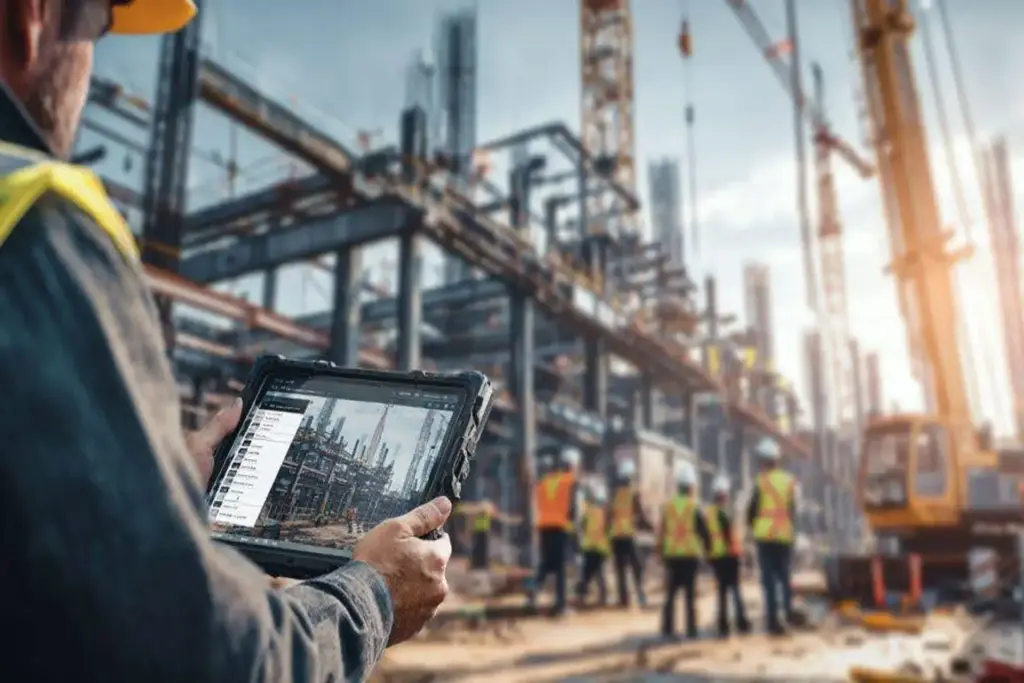
But identifying a problem is not the same as fixing it.
As AI becomes more common on construction projects, the industry is shifting its focus from what the technology can find to what teams do with the information it provides.
Construction Has More Project Data Than Ever
Construction companies have spent years improving the way they document and manage projects.
Teams now use reality capture, digital documentation, photographs, reports and connected software to track conditions and progress throughout a project’s lifecycle. These tools have made it easier for owners, contractors and other project stakeholders to access information from the jobsite.
The challenge is that more information does not always mean better decisions.
A project can generate thousands of photographs, documents, reports and other records. Finding a specific issue within that volume of information can take significant time, particularly when project teams are already managing schedules, budgets, subcontractors and field operations.
AI can help reduce that burden.
Instead of requiring someone to manually review large amounts of information, AI can quickly analyze project data and identify trends, inconsistencies or potential problems. This can give project teams a faster way to understand what is happening on a job.
However, that is only part of the process.
Finding a Problem Is Only the First Step
AI can flag a potential safety issue, identify a construction delay or reveal an unusual pattern in project information. It can help teams see problems earlier and understand what may be contributing to them.
The technology cannot, by itself, change the project schedule, coordinate workers or determine the most practical way to address a field problem.
Those decisions still belong to people.
A project manager may need to reorganize work. A superintendent may need to change how a crew approaches a task. An owner may need to make a decision about cost or schedule. Engineers, contractors and other specialists may need to evaluate the information before deciding what action is appropriate.
This distinction is important because better visibility does not automatically produce better results.
A team may have a clearer picture of a problem without actually making progress toward solving it. The real value of AI comes when the information it provides leads to a decision and that decision leads to action.
Human Experience Still Has a Critical Role
The growing use of AI does not make construction experience less important. In many cases, it makes experienced professionals even more valuable.
Construction projects involve conditions that can be difficult to capture in data alone. Field decisions often depend on experience, site conditions, trade coordination, project requirements and practical knowledge.
AI may identify a pattern, but an experienced professional has to determine whether that pattern matters and what should happen next.
For example, an AI system might identify a potential quality concern in project documentation. A construction professional can then review the information, consider the actual site conditions and determine whether corrective work is necessary.
This combination of technology and human judgment can make AI more useful than relying on either one alone.
AI Works Best When People Stay Involved
For construction companies adopting AI, the goal does not have to be replacing human decision-making.
A more practical approach is to use AI to help employees find and understand information faster while keeping experienced professionals involved in important decisions.
This human-led approach allows technology to handle some of the time-consuming work involved in reviewing project information. At the same time, construction professionals can focus their attention on decisions that require experience, judgment and communication.
The result can be a more efficient workflow without removing the people responsible for managing the work.
AI has the potential to significantly improve how construction teams use project data. It can make information easier to find, help identify potential problems earlier and give teams a clearer view of project conditions.
But the technology is only as useful as the action that follows.
AI can help construction teams understand what is happening. People still have to decide what to do about it.