Several notable developments emerged across the construction industry this week, including new infrastructure awards, leadership appointments in the data center sector, and expanded investment in artificial intelligence initiatives.
From bridge replacements in Minnesota to technology-focused organizational changes at major contractors, companies continue positioning themselves for long-term growth in key markets.
National Building Museum Launches Interactive Summer Attraction
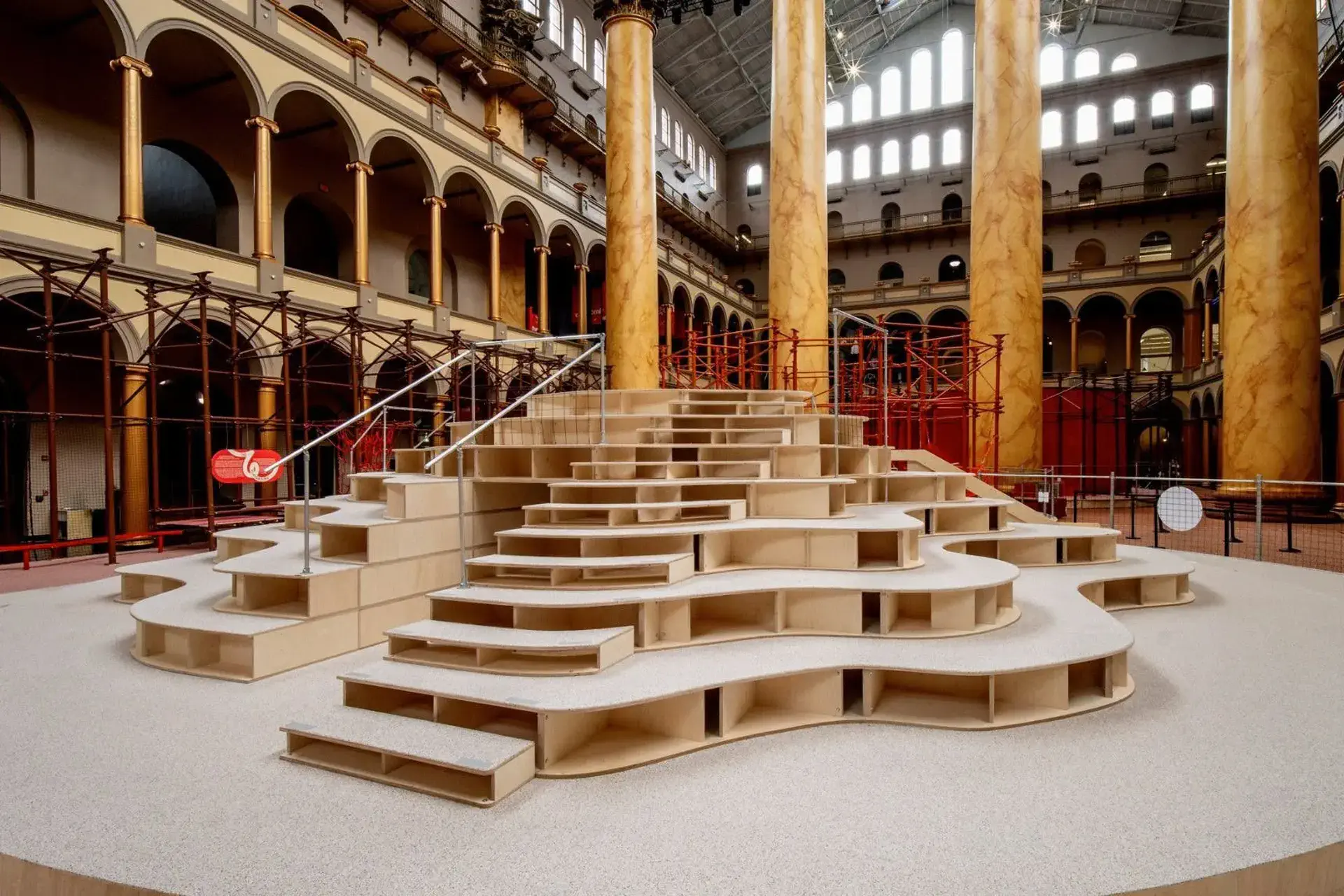
The National Building Museum in Washington, D.C., has opened its seasonal attraction, “The Playground,” designed to introduce visitors to concepts related to design, construction, and the built environment through interactive experiences.
The installation features a variety of activities, including climbing structures, obstacle courses, tunnels, slides, rope hammocks, basketball stations, and a construction-themed digging area. A central feature known as “The Hill” uses layered plywood elements to create an immersive landscape for exploration and play.
Museum officials said the exhibit aims to encourage creativity and help younger visitors develop an appreciation for architecture, engineering, and thoughtfully designed spaces.
The attraction will remain open through August 30.
Lunda Construction Secures Multiple Infrastructure Assignments
Lunda Construction, a subsidiary of Tutor Perini, announced progress on several transportation infrastructure projects in Minnesota.
The contractor will participate in the Roberts Street Railroad Bridge Replacement project in St. Paul, where an aging railroad bridge crossing the Mississippi River will be removed and replaced with a modern rolling bascule truss structure. Construction activities are expected to continue through late 2029.
The company also received a $33.4 million contract from the Minnesota Department of Transportation for work along Highway 77 in Hennepin and Dakota counties.
Additionally, Lunda submitted the apparent low bid for another transportation project on Highway 243 in Chisago County. If finalized, the project would add another significant infrastructure assignment to the contractor’s growing portfolio.
Construction on both highway projects is expected to begin later this year, with completion targeted for 2028.
PCL Strengthens Data Center Leadership
PCL Construction has expanded its leadership team to support growing demand for digital infrastructure projects across North America.
The company promoted Tyler Kautz to Regional Vice President of Digital Infrastructure. In his new role, Kautz will focus on supporting clients in the hyperscale and colocation data center markets while helping guide the contractor’s continued expansion in the sector.
PCL has delivered more than 120 mission-critical and data center projects throughout North America over the past 20 years and continues to invest heavily in the growing market.
The company also announced the appointments of Carl Haas as District Manager and Peter Losh as Operations Manager. Both leaders will oversee active data center construction projects and operational activities within the division.
Skanska Forms Dedicated AI and Digital Transformation Team
Skanska USA Building has established a new Digital Transformation and Solutions team aimed at expanding the use of artificial intelligence and digital tools across project delivery operations.
The new group will focus on developing practical technologies that improve efficiency, decision-making, and collaboration for project teams.
Will Senner has been named Senior Vice President and will lead the initiative. Senner brings more than two decades of experience within Skanska, having held leadership positions in engineering, preconstruction, and operations.
According to the company, the team will work directly within Skanska’s core business operations and report to executive leadership as it develops solutions designed to modernize construction workflows and improve project outcomes.
Industry Focus Remains on Infrastructure and Technology
These announcements highlight two major trends shaping the construction sector in 2026: continued investment in transportation and infrastructure projects, and growing adoption of digital technologies such as artificial intelligence and advanced data center construction.
As public agencies, developers, and technology companies increase spending in these areas, contractors are positioning themselves with specialized expertise, leadership talent, and technology-focused teams to meet future demand.